
Hyperbaric Chambers
1.5 ATA vs 2.0 ATA Hyperbaric Chambers:
September 7, 2026

The pressure rating is one of the first specifications to compare when evaluating a hyperbaric chamber. A 1.5 ATA chamber and a 2.0 ATA chamber do not provide the same operating environment, oxygen exposure, or practical requirements.
The higher figure is not automatically the better choice. The appropriate option depends on your intended use, oxygen delivery system, available space, operating procedures, budget, and whether the chamber will be used privately or in a professional setting.
This guide explains the main differences and the questions to verify before deciding.
1. Understand what ATA means
Pressure rating
ATA means “atmospheres absolute.” At sea level, normal atmospheric pressure is approximately 1.0 ATA.
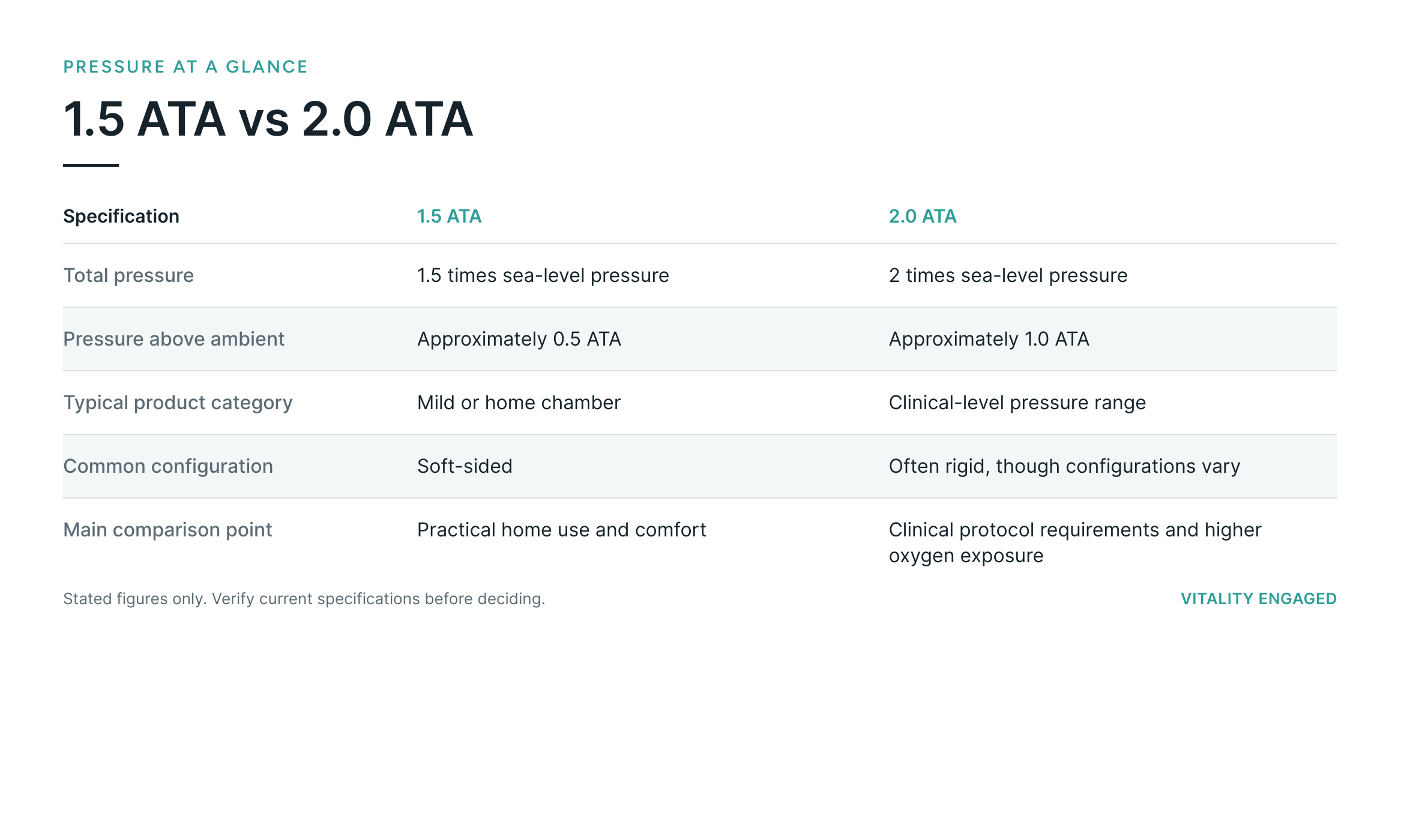
A 1.5 ATA chamber adds approximately half an atmosphere above normal pressure. A 2.0 ATA chamber adds a full atmosphere above normal pressure.
That difference affects the chamber design, oxygen delivery, operating procedures, and safety requirements. It is not simply a small increase in performance.
2. Separate pressure from oxygen delivery
Pressure is only one part of the specification
A chamber’s ATA rating does not describe the complete treatment environment. You should also verify:
Whether the user breathes ambient air or concentrated oxygen.
How oxygen is delivered.
Whether oxygen is delivered through a mask, hood, or another system.
The session duration and operating schedule.
The manufacturer’s instructions for use.
Whether the equipment is intended for wellness use or a medical indication.
The Undersea & Hyperbaric Medical Society defines hyperbaric oxygen therapy as breathing near-100% oxygen inside a chamber at a pressure above normal atmospheric pressure. UHMS also states that its accepted clinical indications use near-100% oxygen at a minimum of 2.0 ATA.
This distinction matters. A soft chamber that reaches 1.5 ATA is not automatically equivalent to a clinical HBOT system. A soft chamber that reaches 2.0 ATA is also not automatically equivalent to a hospital or accredited clinical chamber. The full system, intended use, oxygen concentration, device clearance, monitoring, and operating environment all need to be considered.
Review the UHMS position statement on low-pressure chambers and confirm the manufacturer’s stated use before interpreting a pressure rating as a medical capability.
3. Compare 1.5 ATA chambers for home use
Practical fit
A 1.5 ATA chamber is commonly positioned as a mild or home-use chamber. The lower operating pressure may support a simpler setup and a more manageable operating routine, depending on the model.
For a private buyer, relevant considerations include:
Available room and storage space.
Whether the chamber is used lying down or seated.
Ease of entry and exit.
Noise from the compressor and oxygen equipment.
Session length and frequency.
Whether another person needs to assist with setup.
Manufacturer support and warranty coverage.
Vitality Engaged currently lists two Skybaric models at 1.5 ATA.
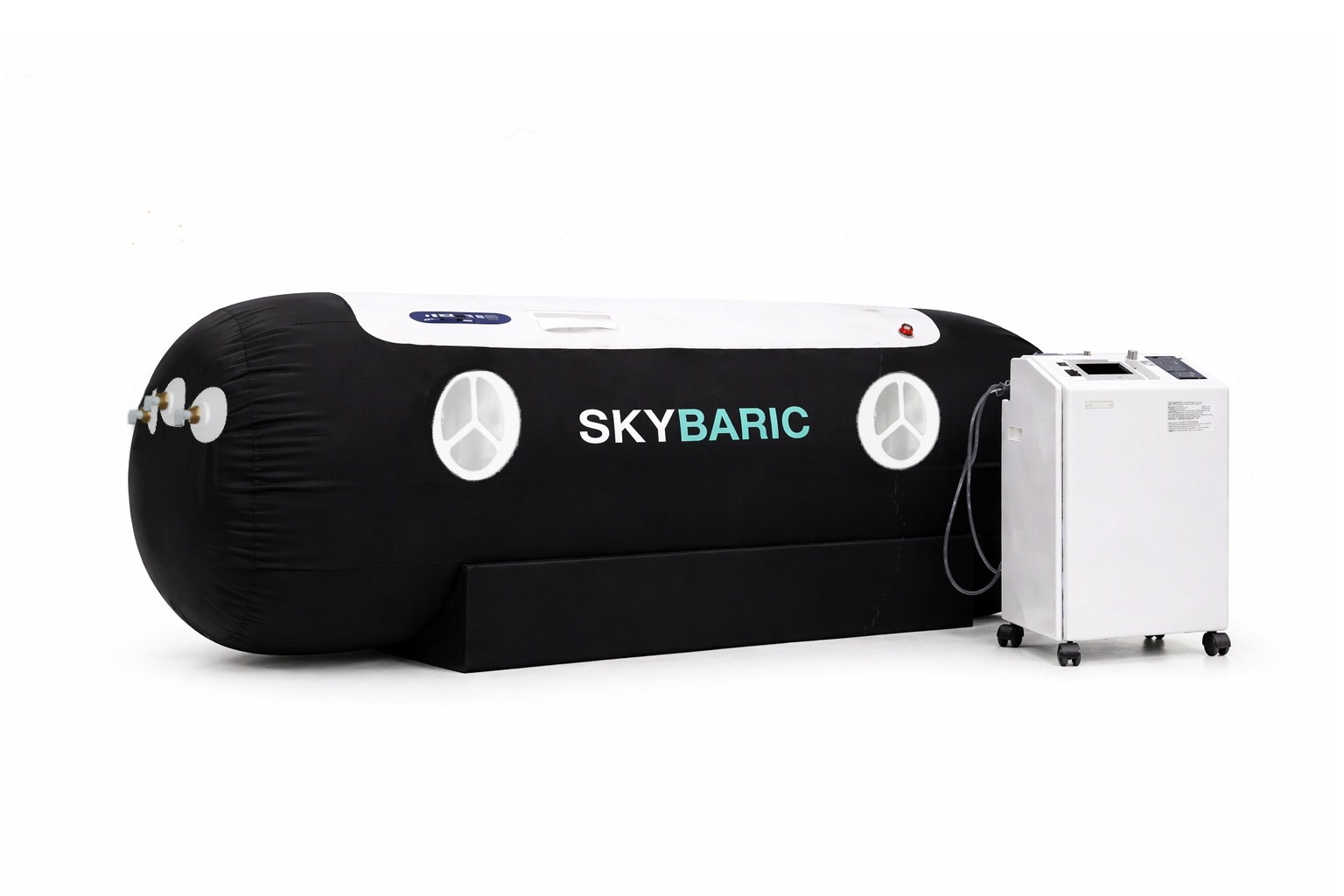
Skybaric Go
The Skybaric Go is listed as a single-user, lying-position soft chamber with a stated working pressure of 1.5 ATA.
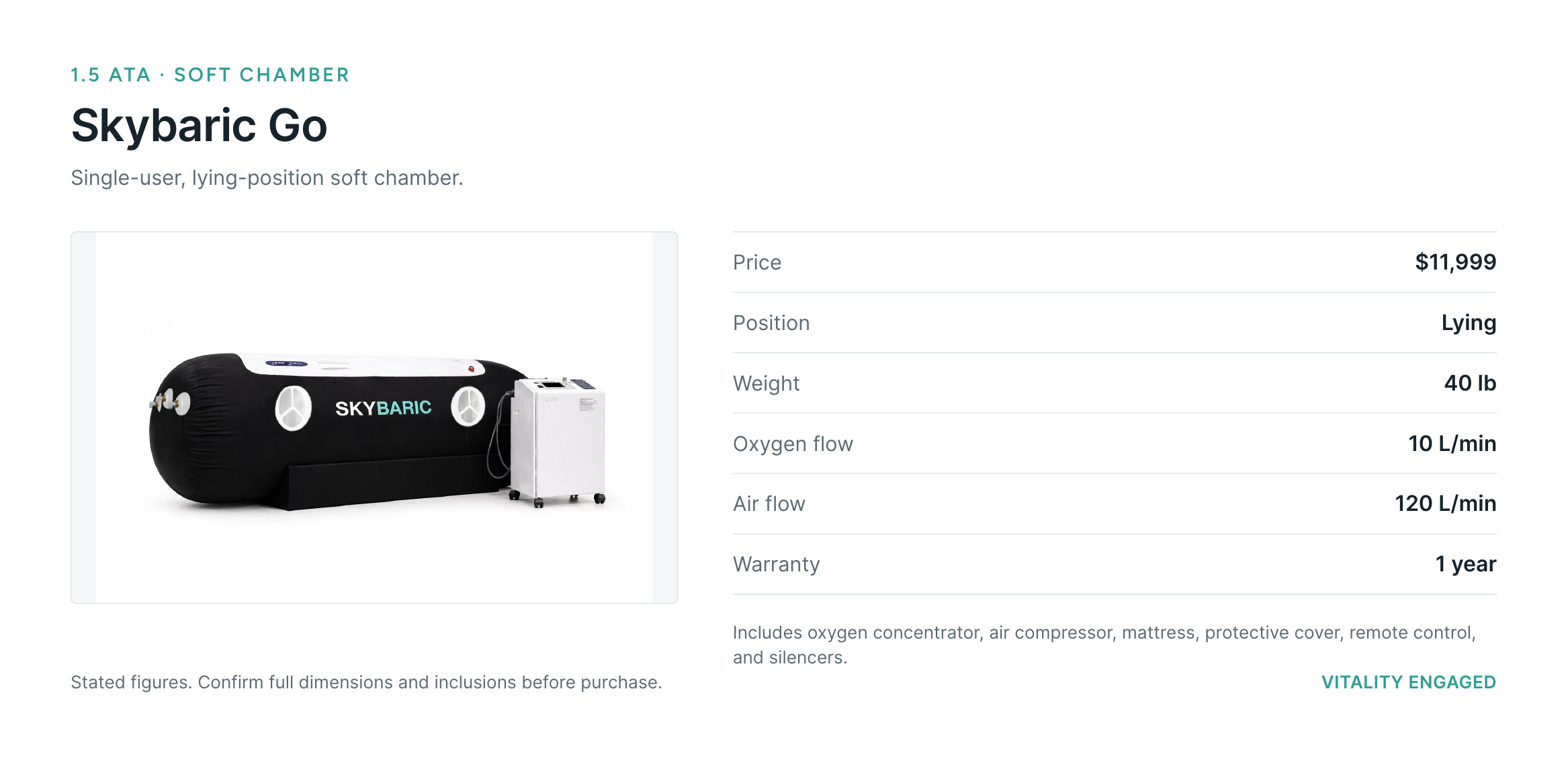
The manufacturer-listed package includes an oxygen concentrator, air compressor, mattress, protective cover, remote control, and silencers. The product page describes the chamber as lightweight and easy to store or move. Full external dimensions beyond the 36-inch diameter should be confirmed before purchase.
See the Skybaric Go details or compare current chamber specifications.
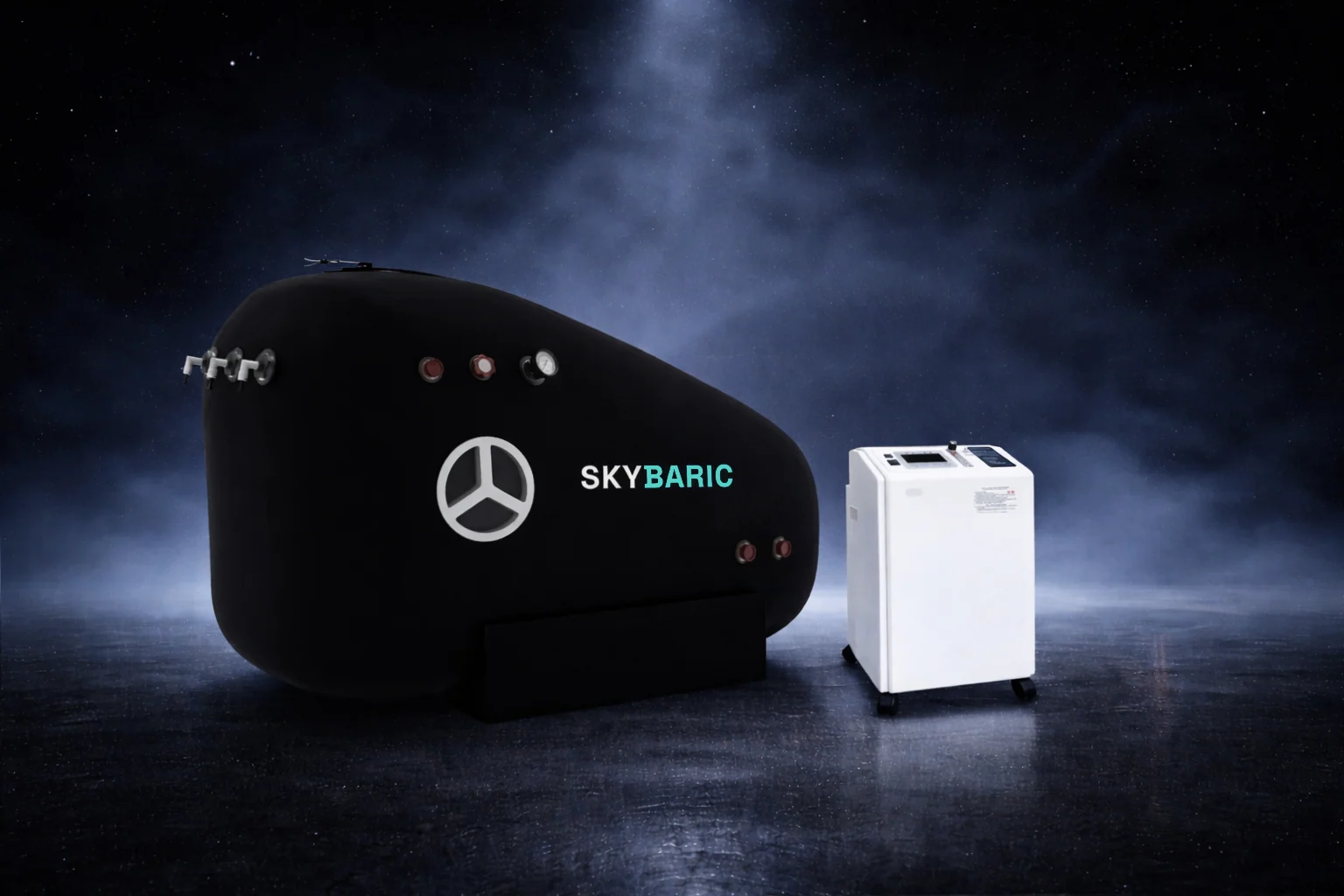
Skybaric Lounge
The Skybaric Lounge is also listed at 1.5 ATA, but it uses a seated or reclined configuration.
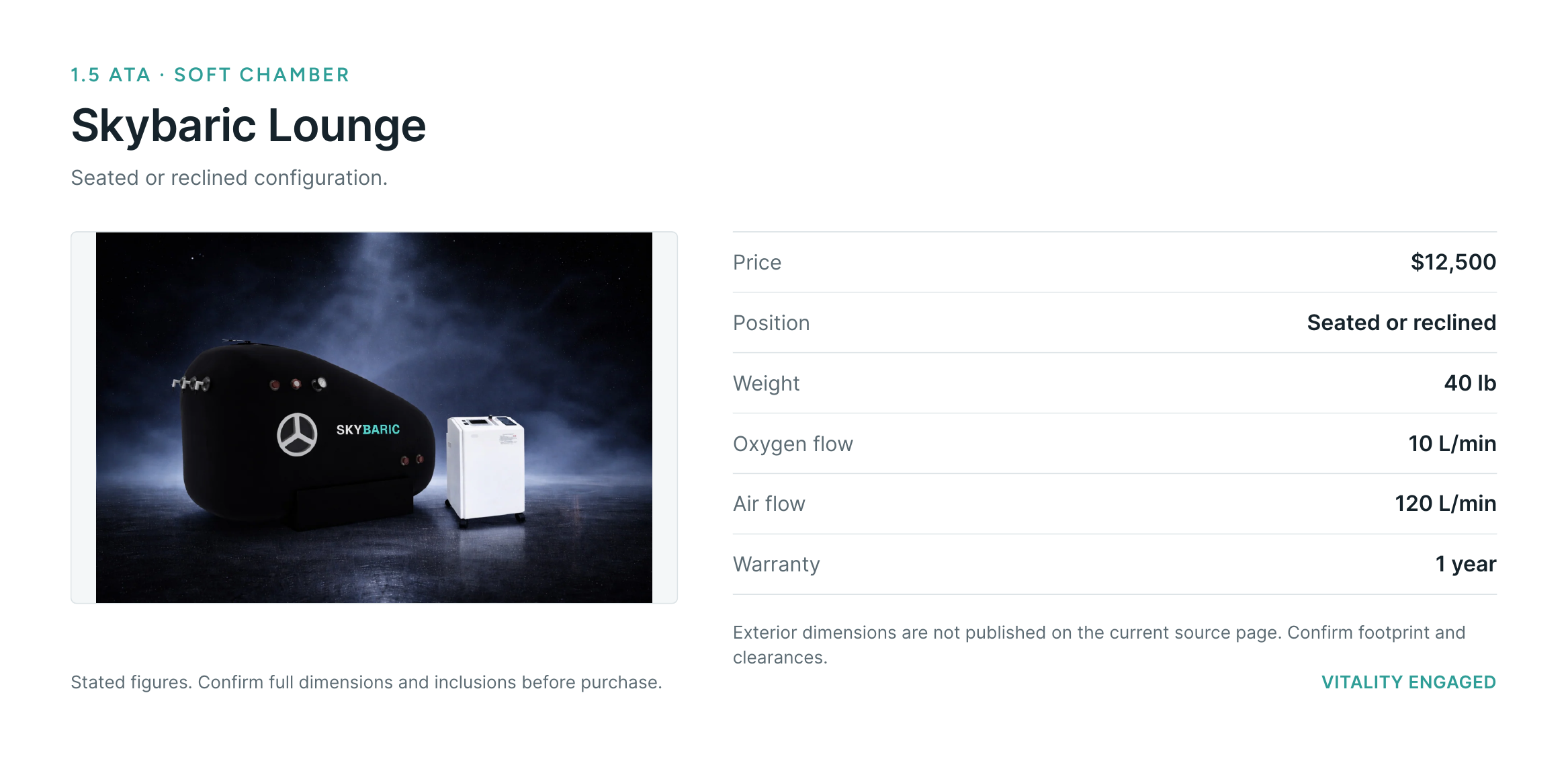
The seated design may be more practical for buyers who do not want to lie down during a session. It may also suit a room where a chair-based layout is easier to arrange. The full exterior dimensions are not published on the current source page, so confirm the footprint and required clearances.
See the Skybaric Lounge details.
4. Compare 2.0 ATA chambers carefully
Higher pressure does not establish better outcomes
A 2.0 ATA rating places a chamber within the pressure range commonly associated with clinical HBOT. However, pressure alone does not confirm that a specific chamber is appropriate for a medical indication.
You should verify:
The exact maximum and working pressure.
Whether the chamber is designed for continuous or intermittent use.
Oxygen concentration and delivery method.
Device clearance or registration relevant to your jurisdiction.
Required supervision and training.
Fire-safety procedures.
Maintenance and inspection requirements.
Whether the warranty covers professional or commercial use.
Skybaric Pro
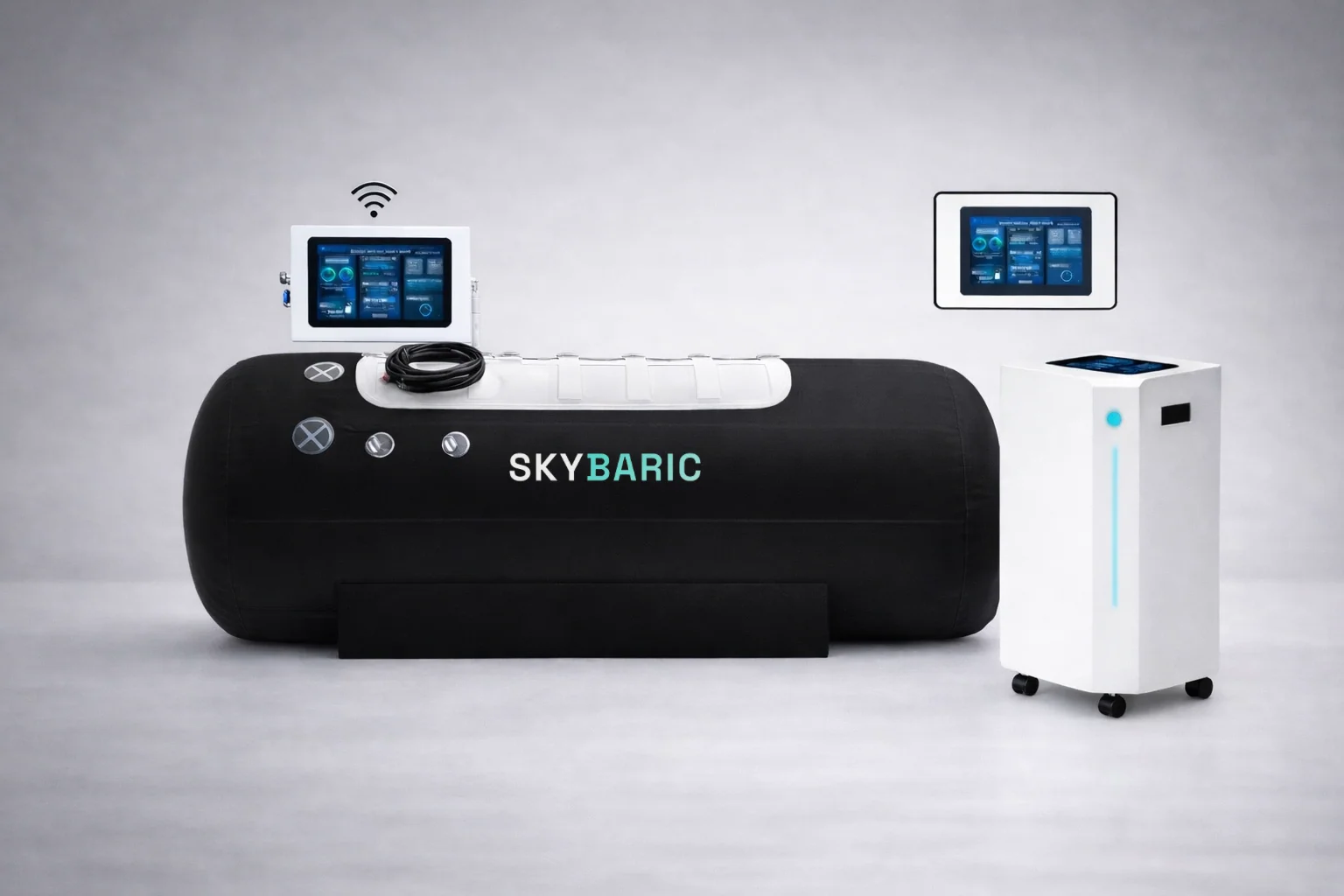
The Skybaric Pro is listed with a working pressure of up to 2.0 ATA. It is a single-user, lying-position soft chamber.
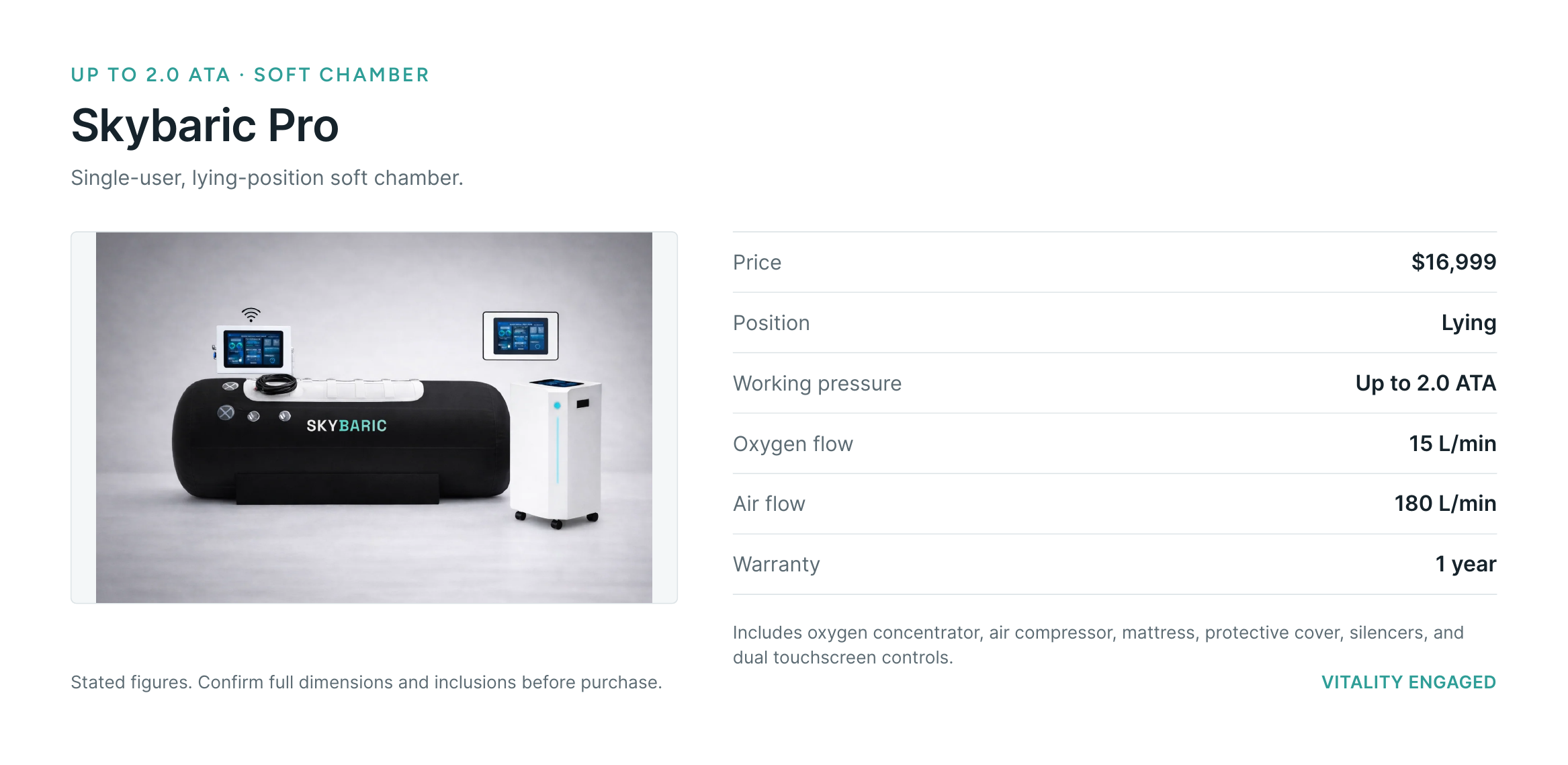
The listed package includes an oxygen concentrator, air compressor, mattress, protective cover, silencers, and dual touchscreen controls. The current product page does not publish a verified weight or full external dimensions.
The higher pressure capability is a specification difference. It should not be interpreted as proof of better outcomes for a particular user or condition. Review the Skybaric Pro details and confirm intended use directly with the manufacturer and a qualified healthcare professional.
5. Consider safety and supervision
Risk changes with pressure and oxygen exposure
Hyperbaric environments can create pressure-related and oxygen-related risks. Ear and sinus discomfort are common concerns because the body must equalize pressure during compression and decompression.
At higher oxygen pressures, additional risks may include oxygen toxicity. Clinical facilities manage these risks through screening, controlled session times, equipment procedures, monitoring, and trained staff.
The FDA advises following manufacturer instructions for safe use of hyperbaric oxygen therapy devices. The agency has also highlighted fire risk and the need for appropriate safety controls in oxygen-enriched environments.
Before using any chamber, discuss your circumstances with a qualified healthcare professional. This is particularly important if you have lung disease, difficulty equalizing ear pressure, a history of seizures, are pregnant, or have another condition that may affect suitability. This article is a purchasing guide, not medical advice.
6. Match the chamber to the environment
Home wellness use
A 1.5 ATA chamber may be more practical when your priorities are:
Personal use.
A soft, movable configuration.
A lower purchase price.
A lying or seated home setup.
Storage flexibility.
A wellness-oriented operating context.
The model still needs to fit your room, schedule, comfort preferences, and support expectations.
Business or professional use
A business should evaluate more than pressure and purchase price. Consider:
Number of sessions per day.
Cleaning between users.
Staff training and supervision.
Client entry and exit.
Privacy and comfort.
Equipment placement and ventilation.
Maintenance and response times.
Commercial-use terms in the warranty.
Required documentation and inspections.
Whether the chamber fits the facility’s services and local requirements.
Vitality Engaged’s business evaluation guide outlines these operational considerations for chiropractors, gyms, wellness centers, and performance facilities.
A 2.0 ATA chamber may be relevant when a qualified medical provider is evaluating a clinical HBOT application. A wellness facility should not assume that a higher rating alone creates a clinical service. The equipment, protocols, staffing, and regulatory requirements must align.
7. Use a repeatable decision framework
Questions to verify before deciding
Purpose: Is the chamber for personal wellness, recovery programming, or a defined medical indication?
Pressure: What is the manufacturer’s verified working pressure, not only the maximum advertised figure?
Oxygen: What concentration is delivered, and through which system?
Configuration: Will a lying, seated, or reclined position work for the intended users?
Space: What are the full dimensions, clearance needs, and equipment requirements?
Operations, Who will set up, monitor, clean, maintain, and service the chamber?
Support: What training, documentation, warranty coverage, and replacement-part support are included?
Total cost: What is included in the listed price, and what is excluded for delivery, setup, electrical needs, maintenance, or financing?
Conclusion
For many home buyers, a 1.5 ATA chamber may offer a simpler comparison focused on space, comfort, portability, and personal use. A 2.0 ATA chamber provides a higher pressure capability, but it also requires closer review of oxygen delivery, intended use, supervision, safety procedures, and regulatory context.
For a recognized medical indication, do not select a chamber based on ATA alone. Confirm the complete protocol with a qualified healthcare professional and verify whether the specific equipment is appropriate for that use.
Compare the stated figures. Check what is included. Match the chamber to your environment and priorities.
Specifications and prices in this article were verified against manufacturer information on October 3, 2026. Product details can change. Vitality Engaged may earn a commission from manufacturer links; see our affiliate disclosure.