
Hyperbaric Chambers
Are Hyperbaric Chambers Worth It?
October 5, 2026

A hyperbaric chamber can be a significant purchase for a household, recovery center, chiropractic office, gym, performance facility, wellness center, or hotel. The central question is not whether a chamber is valuable in the abstract.
The more useful question is whether the equipment fits your intended use, available space, operating requirements, budget, and expectations.
For a private buyer, that may mean comparing regular home use with the cost and inconvenience of visiting a facility. For a business, it means evaluating client flow, staff responsibilities, cleaning, warranty coverage, local requirements, and actual demand.
Vitality Engaged does not manufacture or sell hyperbaric chambers. We organize stated specifications and practical considerations so you can compare equipment more clearly. A higher pressure rating or higher price does not, by itself, establish better outcomes.
1. Start with the intended use
Personal wellness
A home chamber may be worth considering when you expect consistent use over an extended period. The equipment is more difficult to justify if you anticipate only occasional sessions or are uncertain whether the routine will fit your schedule.
Important questions include:
How many sessions do you realistically expect each month?
Will the chamber remain accessible after setup?
Do you prefer a lying, seated, or reclined position?
How much room can the equipment occupy?
Who will handle setup, cleaning, and routine maintenance?
Are you buying for general wellness, recovery programming, or a defined medical purpose?
A home chamber does not replace medical evaluation. If your goal involves a medical condition, discuss the appropriate care setting and equipment with a qualified healthcare professional.
Professional and hospitality use
A chamber can also be evaluated as part of a broader service environment. Potential settings include:
Recovery centers
Chiropractors’ offices
Gyms and performance facilities
Wellness centers
Sports training environments
Hotels adding wellness amenities for guests
In these settings, “worth it” is not the same as “will this generate a return?” Vitality Engaged does not project revenue, client outcomes, or return on investment. The practical question is whether the equipment fits the facility’s existing operations and service model.
A hotel, for example, may value a wellness amenity because it supports the guest experience. That does not establish that a particular chamber will produce a financial return. Guest demand, staffing, booking procedures, cleaning standards, insurance, and local requirements still need to be assessed.

2. Understand what the listed price includes
Purchase price is only one field
The listed price should be treated as a starting point. Your actual investment may also include delivery, setup, electrical requirements, training, maintenance, replacement parts, insurance, and facility modifications.
For a private buyer, the equipment may need to fit into a spare room or shared living space. For a business, the chamber also needs room for user access, staff movement, storage, cleaning supplies, and associated oxygen and air equipment.
Check these fields before comparing prices:
Chamber: Configuration, capacity, dimensions, and weight
Pressure: Stated working pressure and maximum pressure
Oxygen system: Flow rate, delivery method, and included equipment
Included items: Compressor, concentrator, mattress or chair, cover, controls, and silencers
Warranty: Duration, exclusions, response process, and commercial-use terms
Setup: Installation requirements, delivery conditions, and training
Ongoing costs: Maintenance, filters, service, electricity, and replacement equipment
A low purchase price may not remain low if important equipment or operational support is excluded. A higher price may include features that matter in one environment but add little value in another.
3. Use current models as reference points
Vitality Engaged currently lists three Skybaric models. The following figures are manufacturer-published information reviewed on October 3, 2026. Specifications and pricing can change.
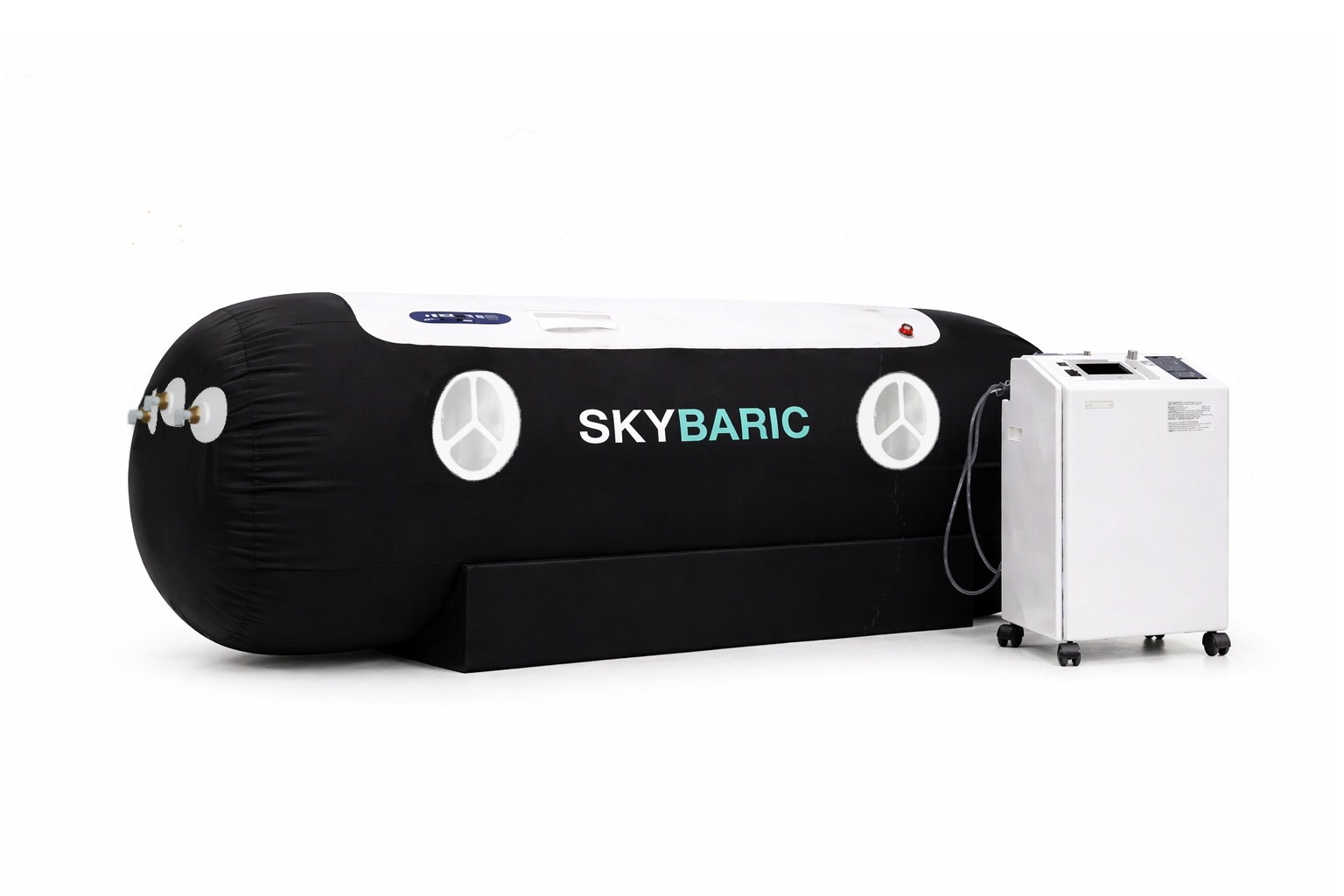
Skybaric Go
Price: $11,999
Pressure: 1.5 ATA
Position: Lying
Capacity: Single user
Stated dimensions: 36-inch diameter; other dimensions not published on the source page
Weight: 40 pounds
Included equipment: Oxygen concentrator, air compressor, mattress, protective cover, remote control, and silencers
Warranty: One year
The Go is the lowest-priced model in the current three-model comparison. Its lying configuration may suit a private buyer or a facility with a room arranged for horizontal sessions. Full dimensions and commercial-use terms should be confirmed before purchase.
Review the Skybaric Go specifications.
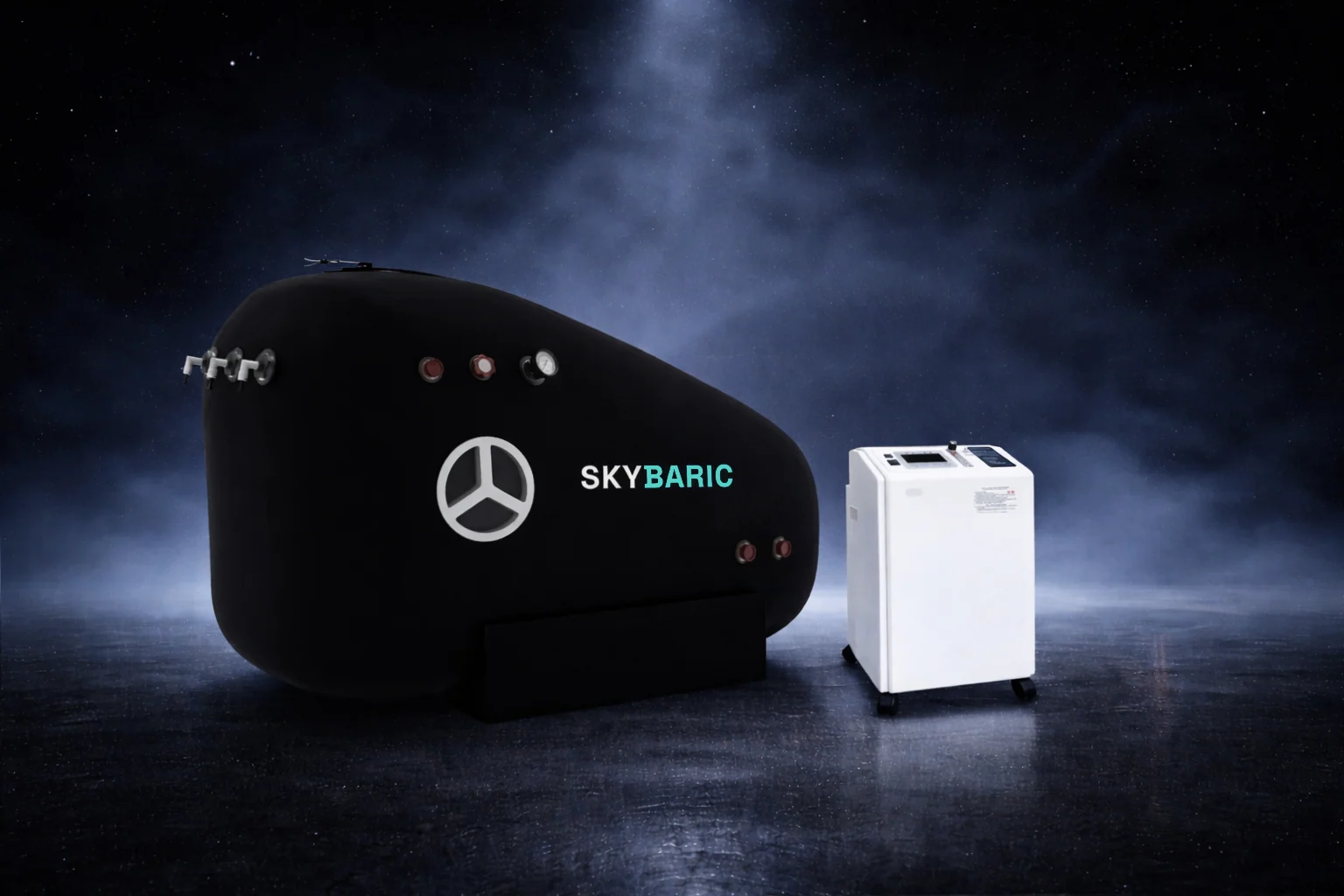
Skybaric Lounge
Price: $12,500
Pressure: 1.5 ATA
Position: Seated or reclined
Capacity: Single user
Stated dimensions: Full exterior dimensions not published on the source page
Weight: 40 pounds
Included equipment: Oxygen concentrator, air compressor, adjustable floor chair, protective cover, brackets, remote control, and silencers
Warranty: One year
The Lounge is the only seated or reclined option in the current Skybaric comparison. That configuration may be relevant where user comfort, entry, or room layout makes a chair-based arrangement more practical.
For a business, the seated design may also affect how staff assist users and how the chamber fits into a private room. It does not, by itself, establish better outcomes.
Review the Skybaric Lounge specifications.
Skybaric Pro
Price: $16,999
Pressure: Up to 2.0 ATA
Position: Lying
Capacity: Single user
Stated dimensions: 36-inch diameter; other dimensions not published on the source page
Weight: Not verified on the current product page
Included equipment: Oxygen concentrator, air compressor, mattress, protective cover, dual touchscreen controls, and silencers
Warranty: One year
The Pro has the highest stated pressure capability and price among these three models. Its higher ATA rating is a specification difference, not proof of better outcomes. Buyers should compare the complete system, intended use, oxygen delivery, supervision requirements, and warranty terms.
Review the Skybaric Pro specifications.
4. Compare convenience with operating work
Home buyers
Home use can reduce travel and scheduling demands. It can also introduce a new routine that requires regular attention.
Consider:
Noise from the compressor and concentrator
Time required for each session
Storage when the chamber is not in use
Access to power
Cleaning and fabric care
Ability to enter and exit comfortably
Manufacturer support when questions arise
Convenience only has value if the equipment remains practical to use. A chamber stored in an inconvenient location may see less use than expected.
Businesses
A commercial setting adds several operational layers. The equipment may need to support multiple users in a day, even if each session is for one person.
Review:
Expected sessions per day
Time between users
Cleaning and inspection procedures
Staff training and supervision
User screening and documentation
Privacy and accessibility
Scheduling and cancellation procedures
Commercial warranty coverage
Service response times and replacement parts
Insurance and local health or safety requirements
A chamber positioned in a hotel wellness area may require a different workflow from one in a chiropractic office. A recovery center may need greater daily availability than a private practice. The same product can have different practical value in each environment.

5. Keep medical claims and pressure ratings separate
Soft-shell chambers marketed for home and wellness use are not automatically equivalent to hospital or clinical hyperbaric systems.
ATA describes pressure. It does not describe every part of the operating environment. You should also verify:
Oxygen concentration and delivery method
Session protocol
Monitoring requirements
Device clearance or registration
Manufacturer’s intended use
Required training
Fire-safety procedures
Maintenance and inspection requirements
The Undersea & Hyperbaric Medical Society’s position on low-pressure chambers provides useful context for distinguishing low-pressure equipment from clinical HBOT.
This article is a purchasing guide, not medical advice. Discuss personal suitability with a qualified healthcare professional, especially if you have a condition that may affect pressure equalization, oxygen exposure, or chamber use.
6. Consider financing without treating it as proof of value
Financing can make an equipment purchase easier to structure, but it does not make the equipment suitable for your use. The monthly payment still needs to fit your budget or operating plan.
For businesses, compare the complete obligation:
Purchase price
Financing cost
Delivery and setup
Maintenance
Insurance
Staff time
Cleaning supplies
Replacement parts
Downtime during service
Vitality Engaged does not provide financing or determine approval. Businesses can review the independent business financing resource, where approval is determined by the financing provider.
Do not treat financing approval as evidence that the chamber will produce revenue or recover its cost. Those questions depend on your facility, pricing, utilization, and operating decisions.
7. Use a fit-based decision
More likely to fit
A chamber may be worth further consideration when:
You have a clear intended use.
You expect regular, sustained utilization.
The equipment fits your available space.
The configuration suits the intended users.
You have reviewed safety and supervision requirements.
The warranty matches your environment.
You have budgeted for costs beyond the listed price.
Less likely to fit
The purchase may deserve more caution when:
Demand is uncertain.
The chamber would be used only occasionally.
The equipment would disrupt normal operations.
Commercial-use coverage is unclear.
Staff responsibilities have not been assigned.
You are relying on a higher ATA rating as a substitute for evidence.
The purchase would create financial strain.
For businesses, compare the chamber with the service you are actually prepared to operate. For home buyers, compare it with the routine you are actually prepared to maintain.
Conclusion
Home hyperbaric chambers can be worth considering when frequent use, space, support, and budget align. The same equipment can also be evaluated by recovery centers, chiropractors, gyms, performance facilities, wellness centers, and hotels adding wellness amenities.
The answer is not determined by price, pressure, or appearance alone.
Compare the stated figures. Check what is included. Verify what is excluded. Match the chamber to your environment, users, and operating requirements.
Compare. Choose with context.
Specifications and prices in this article were reviewed against manufacturer information on October 3, 2026. Product details can change. Vitality Engaged may earn a commission from manufacturer links. See our affiliate disclosure.